Hackathons have always been my favourite events. I love building things, sharing them and competing a little. Most of all, I love the people. You sit down at lunch next to a stranger, and by dinner you are arguing with them about what to build.
After mentoring teams at a lot of hackathons over the years, I got the chance to lead one at Berlin College of Business and Technology. It was the college's first.
The idea
Putting AI into an app is easy now. It takes an afternoon. Finding someone who actually needs that app and would pay for it is the hard part, so that became the focus. Hence the name: AI Entrepreneurship Hackathon.
The rules were short. The product had to run live, with real AI inside and no fake answers. Each team picked one real user with one real problem, then worked out what to charge and what it would cost to run.
More than half of the points had nothing to do with code, so every team had developers, business people and designers working together.
Starting from zero
There was nothing to copy from. The format, branding, posters, website, application form, judging and guides all had to be made from scratch, and the staff, mentors and judges gave a lot of their time to make it work.
There were 20 places and 53 applications. In the end 19 people presented, and 15 of them came from outside the college. Some were beginners, some were engineers, and they ended up on the same teams.
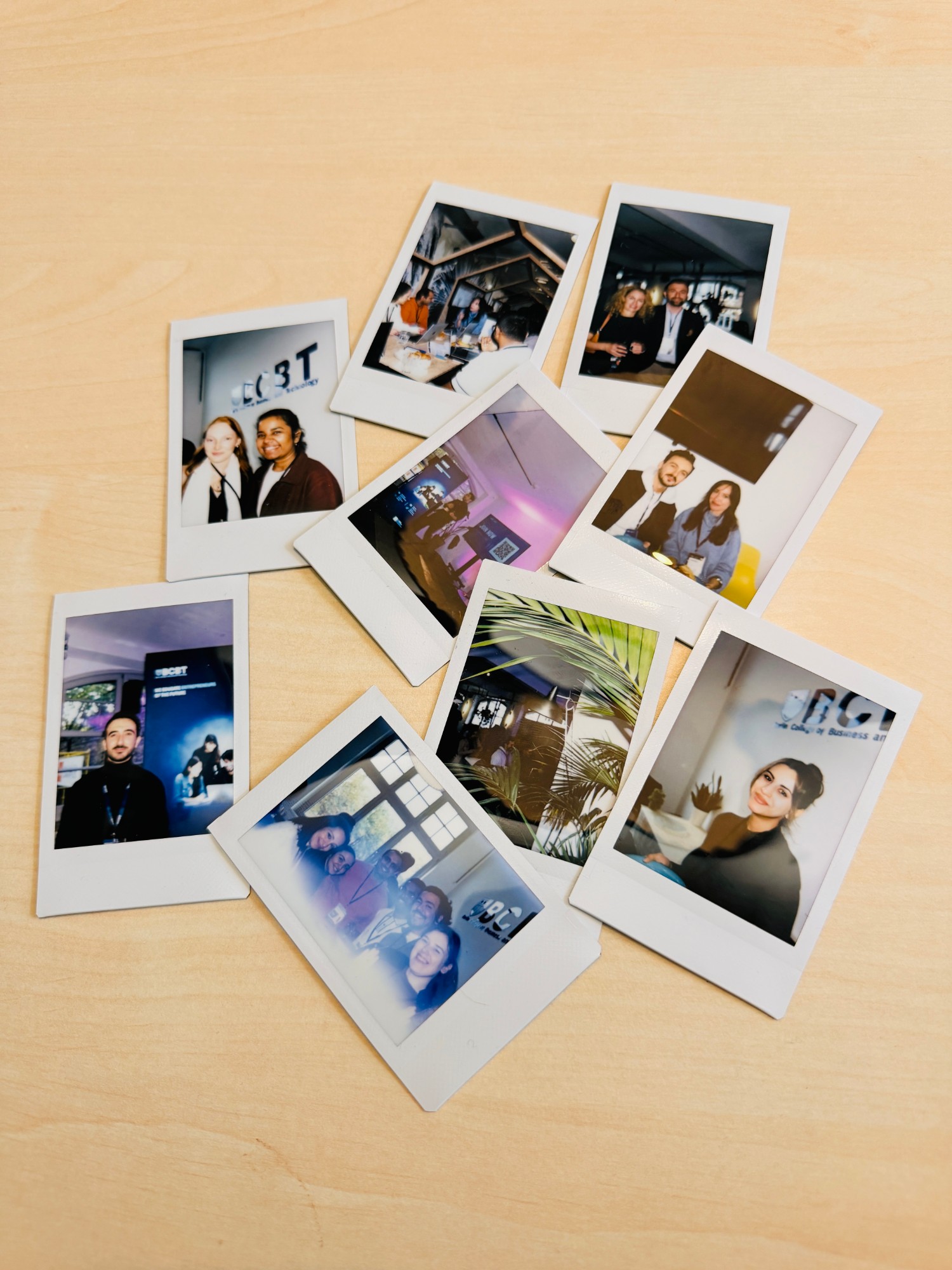
Some polaroids from those days.
The $80 million question
The night before the kick-off, I was in bed trying to memorise my speech. It opened the next morning with a question for the whole room, phones out. One founder, a six-month-old AI startup, Wix buys it. For how much?
$80 million. The company was Base44, and one person built most of it.
Nobody was promised eighty million in four days, but with AI a small team can really build something fast. And one useful thing to know about judges: if they say “interesting idea”, they mean no.
Keep it small
Most teams had only met that morning. They picked a problem, pitched it and started building. For the next two days they worked from campus or online, with mentors around to help. The clocks even went back one night, which meant a free extra hour, probably spent debugging.
Small and working beats big and broken. Pick one thing, make it work, and leave the rest.
What they built
On the last day all four teams got on stage and showed something that really worked.
VibeGuard WINNER
If you built a website or Android app with AI, VibeGuard shows you what's risky and fixes the safe parts.
For freelancers at networking events. You talk for 20 seconds and it makes a contact card with a follow-up message ready to send. The audience picked it with 15 of 37 votes.
Helps customer success managers spot which customers might leave, with a health score for each one and playbooks to keep them.
School Hack
Personalised maths and science practice for students in Germany, with analytics that show teachers where the gaps are.
The best part
On the first morning most of these people didn't know each other. Four days later they were on stage together, answering questions about something they built. That's the part I love.